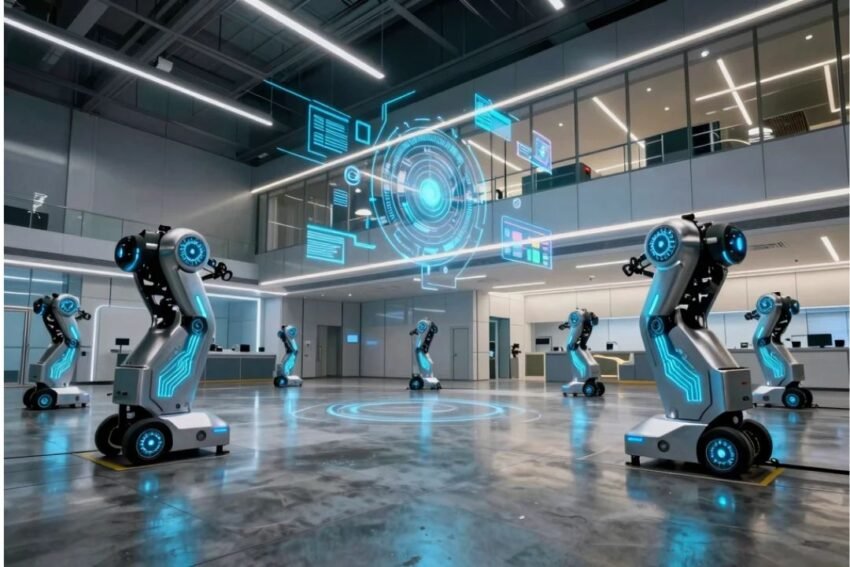
Autonomous robots are no longer a distant vision of the future—they are rapidly becoming a reality in 2026. From self-driving delivery bots to advanced industrial machines, these intelligent systems are transforming how we live, work, and interact with technology. Powered by Artificial Intelligence (AI), machine learning, and advanced sensors, autonomous robots are capable of performing tasks with minimal or no human intervention.
In this SEO-optimized, human-written article, we will explore the rise of autonomous robots, how they work, their real-world applications, benefits, challenges, and what the future holds for this groundbreaking technology.
What Are Autonomous Robots?
Autonomous robots are machines designed to perform tasks independently by sensing their environment, processing information, and making decisions without human control.
Key Characteristics:
- Self-navigation using sensors and cameras
- Decision-making capabilities powered by AI
- Adaptability to changing environments
- Minimal human intervention
Unlike traditional robots that follow pre-programmed instructions, autonomous robots can learn from experience and improve their performance over time.
How Autonomous Robots Work
Autonomous robots rely on a combination of advanced technologies to function effectively.
1. Artificial Intelligence and Machine Learning
AI enables robots to analyze data, recognize patterns, and make decisions. Machine learning allows them to improve over time by learning from past experiences.
2. Sensors and Perception Systems
Robots use sensors such as:
- Cameras
- LiDAR (Light Detection and Ranging)
- Ultrasonic sensors
These help them understand their surroundings and avoid obstacles.
3. Navigation and Mapping
Technologies like SLAM (Simultaneous Localization and Mapping) allow robots to create maps of their environment and navigate efficiently.
4. Edge Computing
Autonomous robots often process data locally (on-device) to make real-time decisions without relying on cloud connectivity.
Types of Autonomous Robots
Autonomous robots come in various forms, each designed for specific tasks.
1. Industrial Robots
Used in manufacturing, these robots handle tasks like assembly, welding, and packaging with high precision.
2. Service Robots
These robots assist humans in everyday tasks, such as cleaning, delivery, and customer service.
3. Autonomous Vehicles
Self-driving cars, drones, and delivery robots fall into this category.
4. Medical Robots
Used in surgeries, rehabilitation, and patient care, these robots enhance precision and efficiency in healthcare.
Real-World Applications of Autonomous Robots
Autonomous robots are already making a significant impact across industries.
1. Logistics and Delivery
Companies are using robots for last-mile delivery, warehouse automation, and inventory management.
Examples:
- Autonomous delivery bots navigating city streets
- Warehouse robots sorting and transporting goods
This reduces costs and improves efficiency in supply chains.
2. Healthcare
In healthcare, autonomous robots assist with:
- Surgeries
- Patient monitoring
- Medication delivery
They help reduce human error and improve patient outcomes.
3. Agriculture
Farmers are using robots for:
- Crop monitoring
- Automated harvesting
- Precision farming
This increases productivity while reducing labor costs.
4. Retail and Hospitality
Robots are being used for:
- Customer assistance
- Inventory tracking
- Automated checkouts
They enhance customer experience and streamline operations.
5. Smart Cities
Autonomous robots play a role in:
- Waste management
- Public safety
- Infrastructure maintenance
They contribute to more efficient and sustainable urban living.
Benefits of Autonomous Robots
1. Increased Efficiency
Robots can work 24/7 without fatigue, significantly improving productivity.
2. Cost Reduction
Automation reduces labor costs and operational expenses over time.
3. Improved Safety
Robots can perform dangerous tasks, reducing risks for human workers.
4. Precision and Accuracy
Autonomous robots minimize errors, especially in critical industries like healthcare and manufacturing.
Challenges and Risks
Despite their advantages, autonomous robots also present challenges.
1. Job Displacement
Automation may replace certain jobs, particularly those involving repetitive tasks.
2. High Initial Costs
Developing and deploying autonomous robots requires significant investment.
3. Ethical Concerns
Questions arise around decision-making, accountability, and the role of robots in society.
4. Security Risks
Autonomous systems can be vulnerable to hacking and cyber threats.
The Role of AI in Autonomous Robotics
Artificial Intelligence is the backbone of autonomous robotics. It enables robots to:
- Recognize objects and people
- Understand speech and commands
- Make complex decisions
As AI continues to evolve, robots will become more intelligent, adaptable, and capable of handling complex tasks.
Future Trends in Autonomous Robotics
The future of autonomous robots is incredibly promising. Here are some trends to watch:
1. Human-Robot Collaboration
Robots will increasingly work alongside humans rather than replacing them.
2. Advanced Mobility
Improved mobility will allow robots to operate in complex environments like homes and cities.
3. Swarm Robotics
Groups of robots will collaborate to complete tasks more efficiently.
4. AI-Driven Autonomy
Robots will become more independent, requiring less human supervision.
5. Expansion Across Industries
Autonomous robots will continue to expand into new sectors, including education, entertainment, and personal assistance.
How Autonomous Robots Will Shape Everyday Life
In the near future, autonomous robots will become a common part of daily life:
- Delivery robots bringing groceries to your doorstep
- Cleaning robots maintaining your home
- Personal assistants managing tasks
- Autonomous vehicles handling transportation
These innovations will make life more convenient, efficient, and connected.
Preparing for a Robotic Future
To adapt to this technological shift, individuals and businesses should:
1. Embrace Technology
Learn how to use and interact with autonomous systems.
2. Develop New Skills
Focus on skills that complement automation, such as creativity and problem-solving.
3. Stay Informed
Keep up with the latest developments in robotics and AI.
Conclusion
The rise of autonomous robots marks a significant milestone in technological advancement. These intelligent machines are transforming industries, enhancing productivity, and reshaping the future of work and everyday life.
While challenges such as job displacement and ethical concerns remain, the benefits of autonomous robotics are undeniable. As technology continues to evolve, the collaboration between humans and robots will define the next era of innovation.