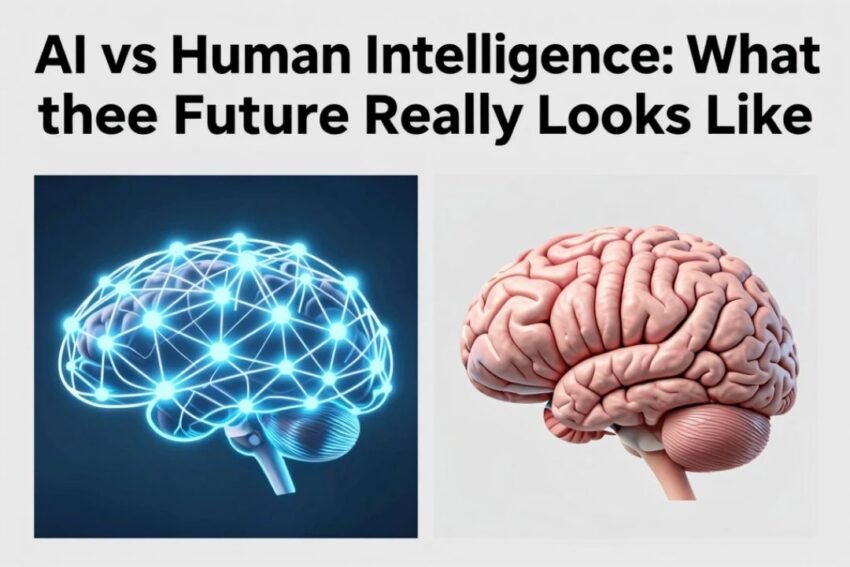
Artificial Intelligence (AI) has rapidly evolved from a niche area of computer science into one of the most transformative technologies of the 21st century. As AI systems become more advanced, a critical question arises: How does AI compare to human intelligence—and what does the future hold for both?
In 2026, the conversation is no longer about whether AI can compete with humans, but how the two can coexist, collaborate, and shape the future together. This SEO-optimized, human-written article explores the differences, strengths, limitations, and future of AI vs human intelligence in a world driven by innovation.
Understanding Artificial Intelligence vs Human Intelligence
Before comparing the two, it’s important to define them clearly.
What Is Artificial Intelligence?
Artificial Intelligence refers to machines or software systems designed to mimic human cognitive functions such as learning, reasoning, problem-solving, and decision-making. These systems rely on algorithms, data, and computational power to perform tasks.
What Is Human Intelligence?
Human intelligence is the natural ability of humans to think, learn, reason, adapt, and apply knowledge. It includes emotional understanding, creativity, and consciousness—traits that are deeply complex and not fully understood.
Key Differences Between AI and Human Intelligence
1. Learning and Adaptability
- AI learns from large datasets and improves through training models.
- Humans learn through experience, observation, and emotional context.
While AI can process vast amounts of data quickly, humans excel in adapting to unfamiliar situations with limited information.
2. Speed and Efficiency
- AI can analyze millions of data points in seconds.
- Humans are slower but often more thoughtful and nuanced in decision-making.
AI dominates in speed, but human judgment is often more reliable in complex scenarios.
3. Creativity and Innovation
- AI can generate content, designs, and solutions based on patterns.
- Humans create original ideas driven by imagination and emotion.
Despite advances in generative AI, true creativity—rooted in consciousness and experience—remains a human strength.
4. Emotional Intelligence
- AI can simulate emotions but does not truly feel them.
- Humans possess empathy, compassion, and emotional awareness.
This makes humans better suited for roles requiring interpersonal interaction, such as counseling and leadership.
5. Decision-Making
- AI makes decisions based on data and algorithms.
- Humans consider ethics, intuition, and social factors.
Human decision-making is more holistic, while AI excels in data-driven environments.
Strengths of Artificial Intelligence
AI has several advantages that make it invaluable in modern society.
1. Data Processing Power
AI can analyze massive datasets quickly and accurately, making it ideal for industries like finance, healthcare, and logistics.
2. Consistency
Unlike humans, AI does not experience fatigue or emotional fluctuations, ensuring consistent performance.
3. Automation of Repetitive Tasks
AI can handle routine tasks efficiently, freeing humans to focus on more complex work.
4. Availability
AI systems can operate 24/7 without breaks, increasing productivity.
Strengths of Human Intelligence
Despite AI’s capabilities, human intelligence remains unmatched in several areas.
1. Creativity and Imagination
Humans can think beyond data, creating entirely new concepts and ideas.
2. Emotional and Social Skills
Human interaction is built on empathy and understanding, which AI cannot truly replicate.
3. Ethical Judgment
Humans can evaluate moral implications and make value-based decisions.
4. Adaptability
Humans can handle unexpected situations and think critically in dynamic environments.
AI vs Human Intelligence in Real-World Applications
1. Healthcare
- AI assists in diagnosing diseases and analyzing medical data.
- Humans (doctors) provide empathy, ethical judgment, and patient care.
The combination leads to better outcomes than either alone.
2. Business and Finance
- AI handles data analysis, fraud detection, and forecasting.
- Humans make strategic decisions and build relationships.
3. Education
- AI offers personalized learning and automated assessments.
- Teachers provide mentorship, guidance, and emotional support.
4. Creative Industries
- AI generates content like text, images, and music.
- Humans bring originality, storytelling, and cultural context.
The Rise of Human-AI Collaboration
The future is not about AI replacing humans—it’s about collaboration.
1. AI as a Co-Pilot
AI acts as an assistant, helping humans make better decisions and work more efficiently.
2. Enhanced Productivity
Workers using AI tools can complete tasks faster and with greater accuracy.
3. Augmented Intelligence
Instead of artificial intelligence replacing humans, it enhances human capabilities.
Challenges in the AI vs Human Debate
1. Job Displacement
Automation may replace certain roles, especially those involving repetitive tasks. However, new opportunities are also emerging.
2. Ethical Concerns
AI raises questions about:
- Bias in algorithms
- Privacy issues
- Accountability in decision-making
3. Over-Reliance on AI
Excessive dependence on AI could reduce critical thinking and human skills over time.
What the Future Really Looks Like
Looking ahead, the relationship between AI and human intelligence will evolve in several key ways:
1. Hybrid Intelligence Systems
Humans and AI will work together in integrated systems, combining strengths from both.
2. New Job Roles
Emerging roles will focus on managing, training, and collaborating with AI systems.
3. Continuous Learning
Both humans and AI systems will need to adapt and evolve continuously.
4. Ethical AI Development
Greater emphasis will be placed on transparency, fairness, and accountability in AI systems.
Will AI Ever Surpass Human Intelligence?
This question remains a topic of debate.
Some experts believe that AI may eventually achieve Artificial General Intelligence (AGI)—a level of intelligence comparable to humans. However, others argue that human consciousness, emotions, and creativity are too complex to replicate fully.
In reality, even if AI surpasses humans in certain areas, it is unlikely to replace the full spectrum of human intelligence.
How to Prepare for the Future
To stay relevant in an AI-driven world:
1. Develop Human-Centric Skills
Focus on creativity, emotional intelligence, and critical thinking.
2. Learn AI Tools
Understanding AI technologies will give you a competitive edge.
3. Stay Adaptable
Be open to change and continuous learning.
Conclusion
The comparison between AI and human intelligence is not a battle—it is a partnership. AI excels in speed, efficiency, and data processing, while humans lead in creativity, emotion, and ethical reasoning.
The future will be shaped by how effectively we combine these strengths. Rather than replacing human intelligence, AI is enhancing it, creating a world where humans and machines work together to achieve more than either could alone.